Two Books Made Me Hate Berlin
A free book from a Berlin flea market, a love note from 1971, and why I love the city too much to accept what it's become.
Two Books Made Me Hate Berlin
"Man, why do you hate Berlin so much?" My friend asks me this all the time.
And I never know what to say. There is something inside me I can't put into words. So I just tell him the easy version: the city doesn't work. But that's not the real answer. The truth is, I never hated Berlin. I hate the system that doesn't respect it.
To explain it properly, I have to go back to 2019, to two old books and one kind old man.
The old man at the Flohmarkt
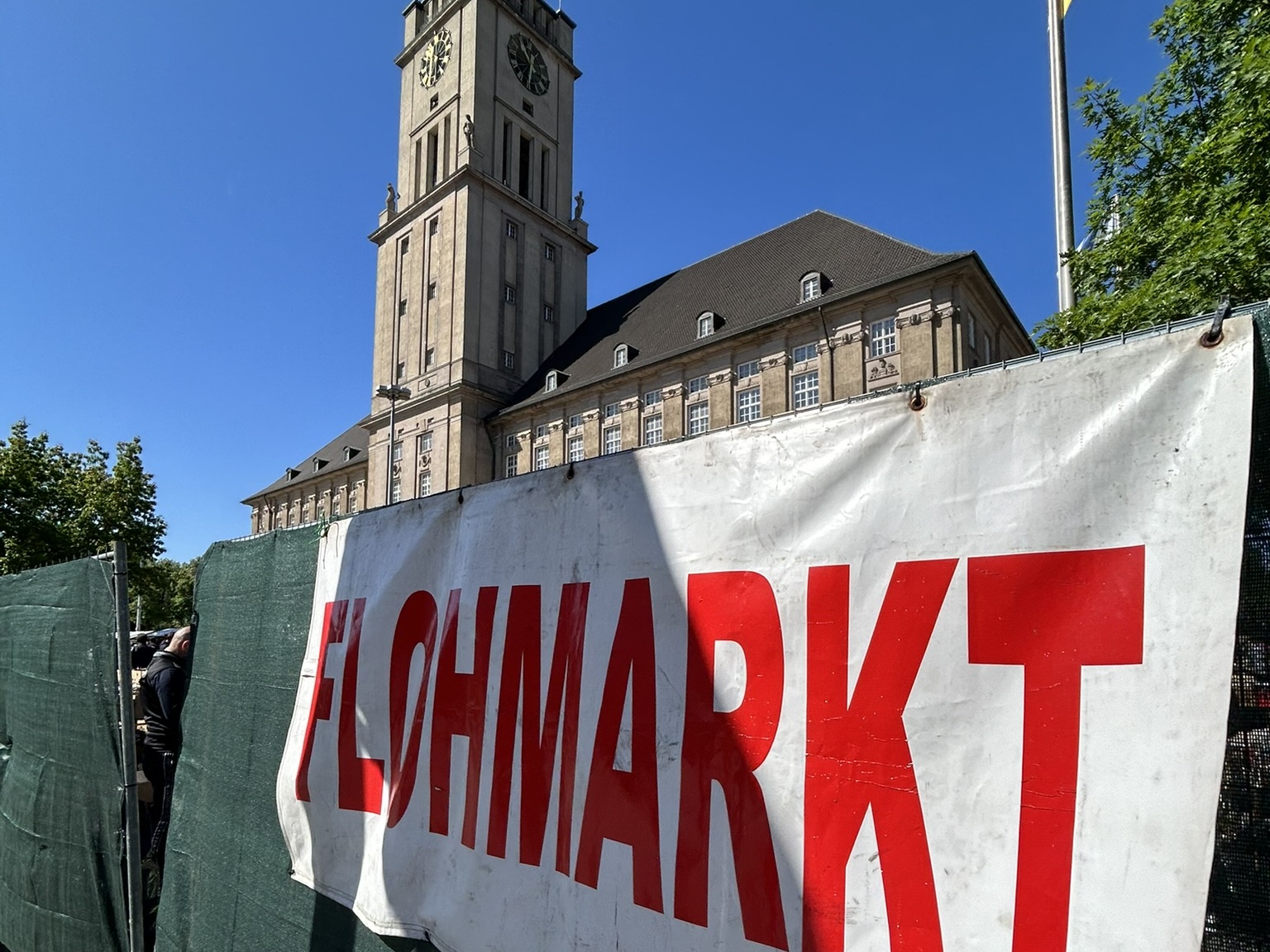
Back in 2019, I was a student in Poland and visited the Flohmarkt at Rathaus Schöneberg. I was practicing German at the time and tried to speak it whenever I could. So I ended up talking in German with an old man at one of the stalls.
He had two books on his table. One was black, with the Berlin bear on the cover and "Paul Ortwin Rave / Berlin."
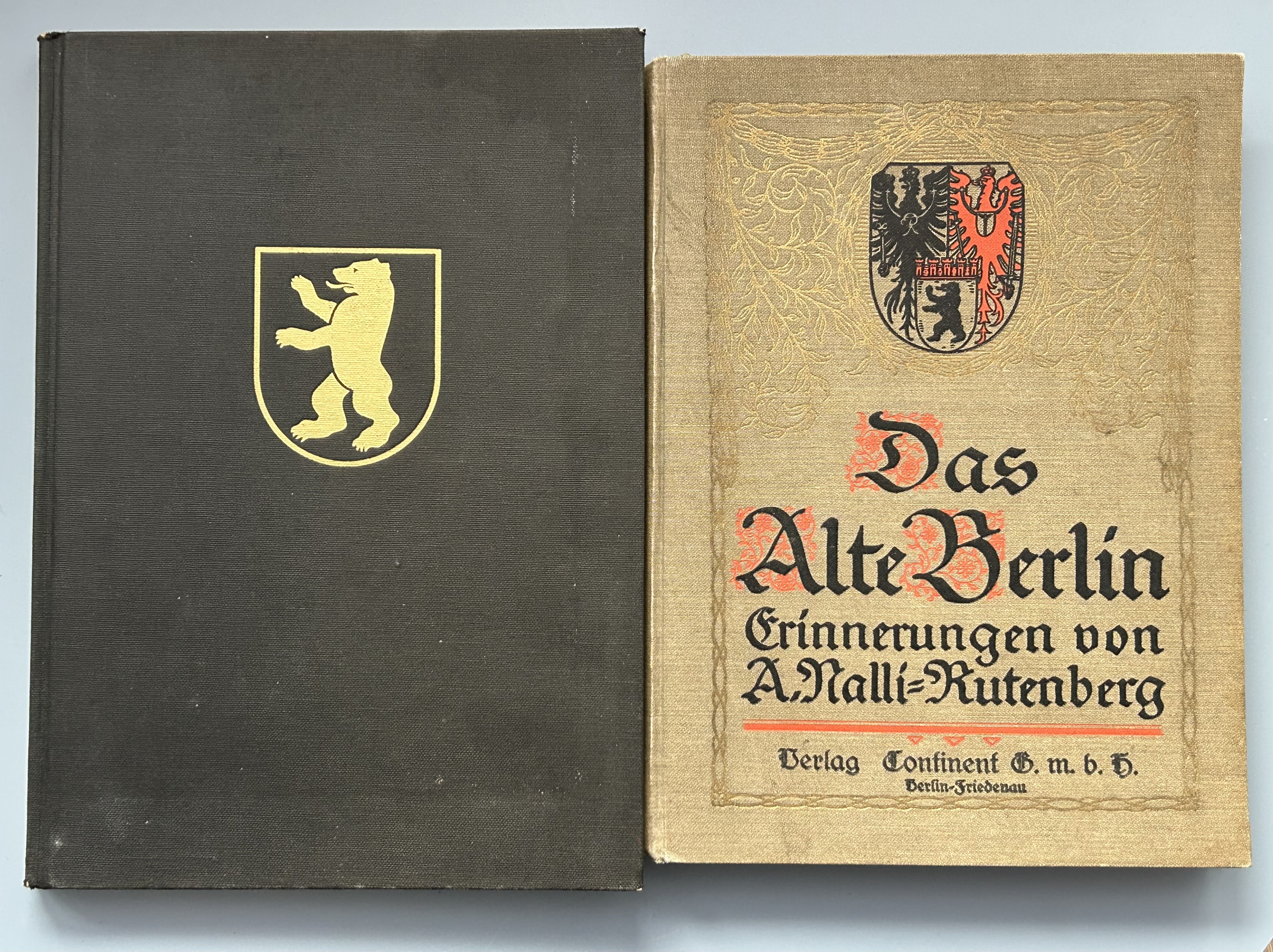
Inside, it says Berlin in der Geschichte seiner Bauten, Berlin in the history of its buildings. It was printed in 1966, full of photos of West Berlin and its architecture. The old man told me he worked as a printing boy at the company that printed this book when he was young.
Imagine that. A man holding a book he helped print when he was young, and more than 50 years later, at a flea market.
I was so interested in the books. They were beautiful, and I wanted to read them. The old man saw that I was a Thai student from Poland trying to speak German, and he gave me the black book for free. I don't think he knew how much that meant to me.
The other one I bought for 10€. It's Das alte Berlin, the memories of A. Nalli-Rutenberg, printed around 100 years ago. I tried to read it, but the old-style font was too hard for me as a non-European. I could barely read a word.
But it didn't matter. These books gave me a dream of how Berlin was. Very beautiful, very active, very civilized and in order. People were hardworking, fighting for their survival, and taking care of it, just like everywhere. When I turned the pages, I felt like I lived in that world before.
The dream
I loved Berlin at that time. I loved the city and the vibe. After these books, I loved it even more.
I dreamed that once I finished my studies, I would come to work in Berlin as the next chapter. I felt like my past life belonged here. Like the city was waiting for me.
A message from the past
One day I found a handwritten message inside the black book, from its old owner:
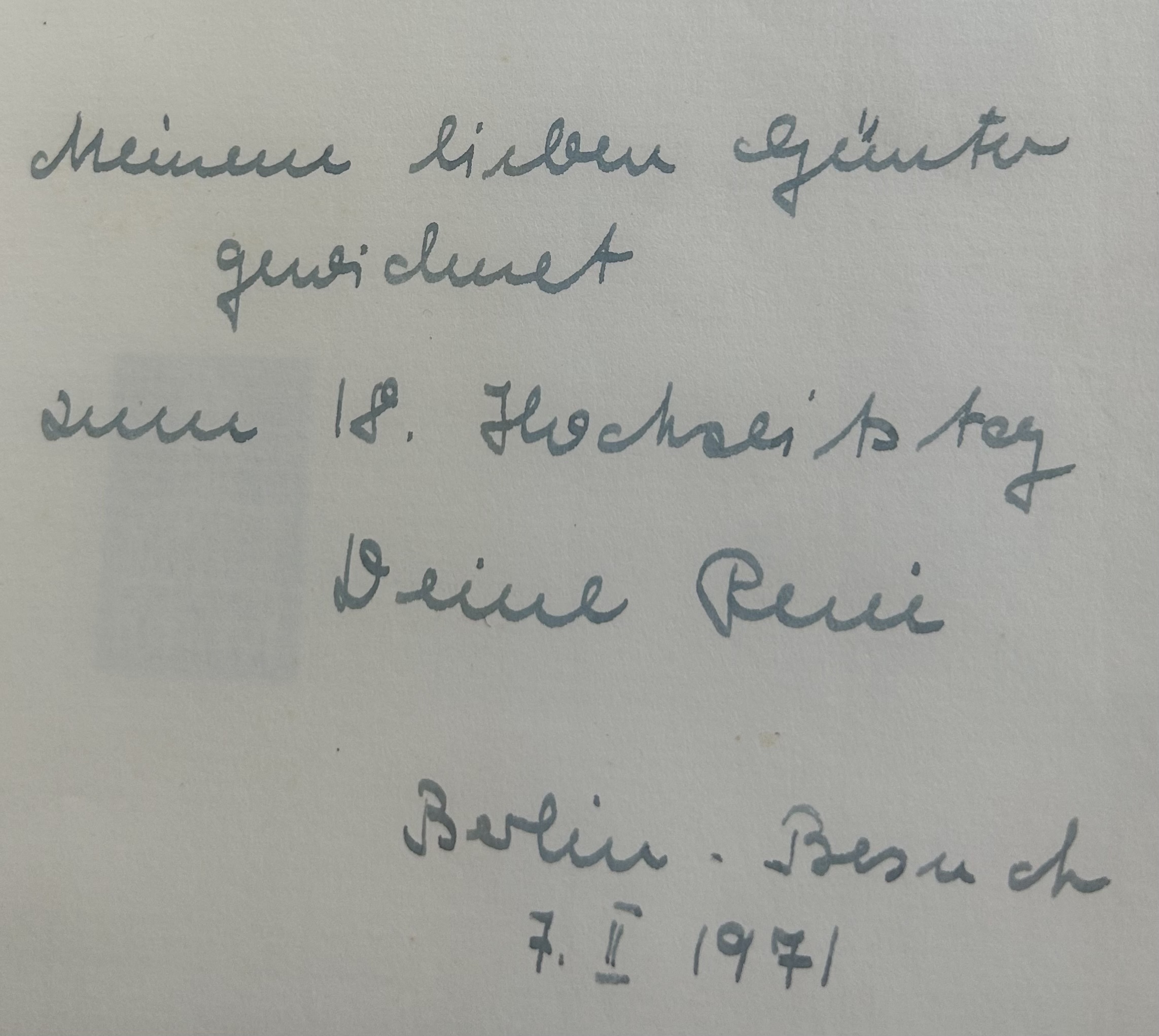
Meinem lieben Günter
gewidmet
zum 18. Hochzeitstag
Deine Reni
Berlin-Besuch
7. II. 1971
"Dedicated to my dear Günter, for our 18th wedding anniversary. Your Reni. Berlin visit, 7 February 1971."
I read it many times. A woman named Reni gave this book to her husband, Günter, to celebrate eighteen years of marriage. They came to Berlin together, and she wanted him to remember it. That means they got married around 1953, only a few years after the war, when this city was still rising from the ruins.
I don't know who they were, or what happened to them. Maybe they just came to Berlin on the anniversary trip, then they moved to Berlin later. Maybe that's how their book found its way to a little stall at Rathaus Schöneberg, almost 50 years later.
In 1971, this book was a gift of love to Günter. In 2019, the same book was a gift to me, from an old man to a Thai student from Poland trying to speak German. Half a century apart.
Inside the book, there is also a child's drawing. A little house, drawn by small hands, with a name and a number next to it. Maybe it was their child, or their grandchild. Maybe this book sat on a family shelf for decades, and a kid found it one day and decided to draw their home inside it. I'll never know. But it tells me this book wasn't just kept. It was lived with.
When I hold this book, I feel the soul in it. The souls of the people who loved Berlin, who came to it and made it their home, who protected it and rebuilt it with their own hands. These books are not just paper. They carry people's lives, kindness passed from one hand to another.
Coming back
Then came COVID. And in 2022, my dream came true. I got my dream job in Berlin. So I came back to Berlin. And it never felt the same.
It felt unmanaged. It felt like some people were intentionally trying to destroy this city by not taking care of it.
I went back to Rathaus Schöneberg to find the old man. He wasn't there anymore. No more books. No more old man. The whole market was just old phones, sunglasses, random stuff that looked like it came from the trash to be resold. Nothing with a memory in it. The feeling was gone.
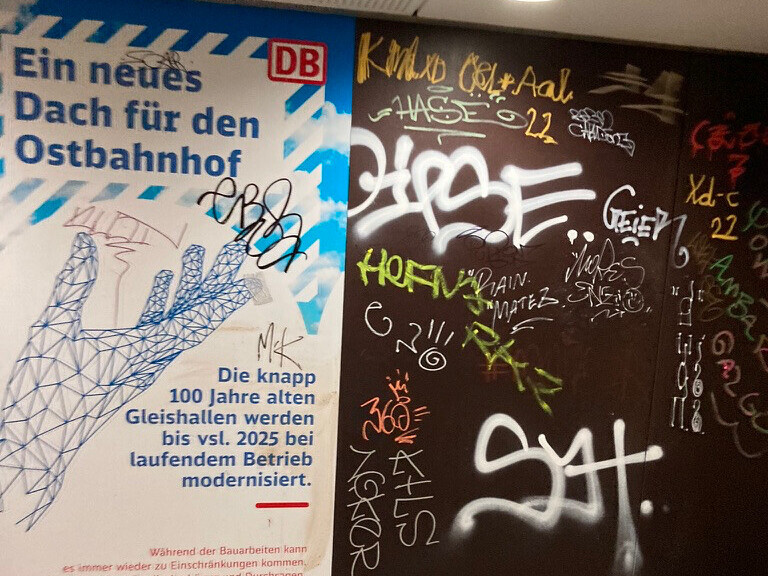
So I began to criticize this city and the people who run it. They collect so much money from taxes. I saw Ostbahnhof being fixed for two years, and it was still being fixed in my third year. The U-Bahn wasn't working, and four years later it's still broken. Every time I visit, it's worse. More dirty, more homeless people, more graffiti, more chaos.
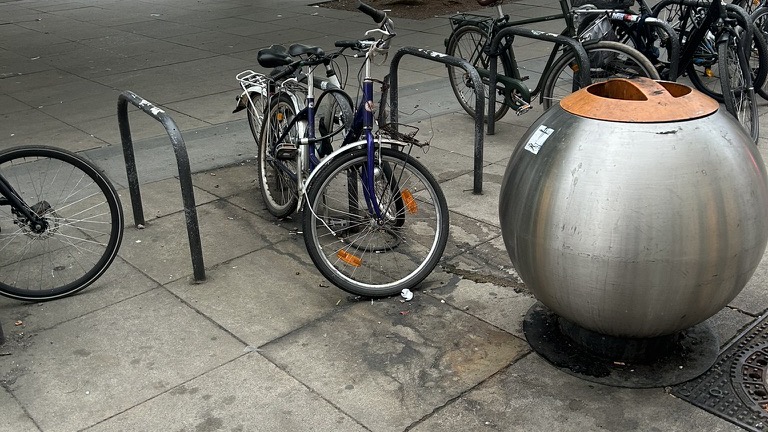
I know Berlin has good sides too. There are more cycling paths now. The public transport, when it works, is great. I'm not blind to that. But when I see the mess in the lovely city I pictured, it hurts me. Reni and Günter, the old man, the people in Nalli-Rutenberg's memories, all the lives I found in these books. It feels like the modern world is trying to erase them.
In the end, I didn't move. I still got my dream job in Berlin. Luckily, the Berlin team appreciated my work and made me the only member allowed to work from outside Germany. So I chose to stay in Poznań because of the pain I felt in Berlin. In Poznań, I see a city that keeps rebuilding and growing, cleaner and more organized every year. I'm happy to pay my taxes in Poznań, because I see my contribution can be a part that makes Poznań a better place.
Warsaw and Berlin
I live in Poland, so I know Warsaw well too. Back in 2016, I didn't like Warsaw at all. It was messy, full of ugly communist buildings and graffiti, poor and crowded. Then I visited again in 2021, and it shocked me. It felt like I was in Tokyo. Everything was so well organized and managed. The communist feeling was gone. It had become a modern city, almost overnight.
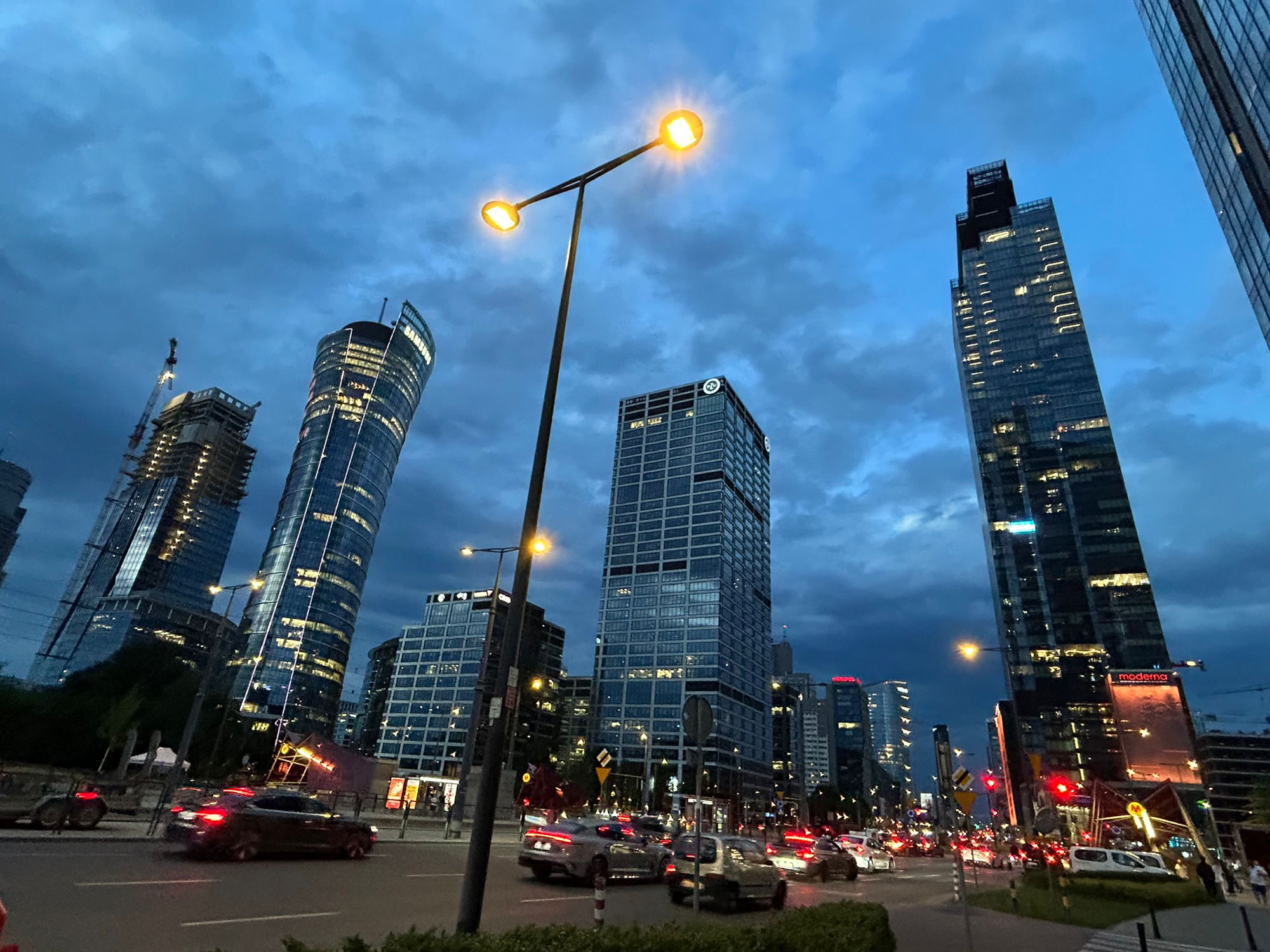
Once, at a war memorial in Warsaw, my eyes welled up. I didn't fully cry, but the tears came. I was sad that Germany flattened such a lovely city in the war, and then the people of Warsaw rebuilt it, stone by stone, with love. And they're still building it, better every year.
Berlin was bombed too. It was destroyed too, and it was rebuilt too. People like Reni and Günter, who married in the years after the war, lived through that. People who lost everything picked the city up again from the rubble, and for a while it was good. West Berlin was clean, it worked, it was proud of itself.
That's what makes me sad, and a little angry. Both cities started from the same rubble. Warsaw kept going, cleaner and better every year. Berlin was rebuilt and good too, but somewhere it stopped moving forward and started sliding back.
And it feels like a choice, not an accident. Maybe people just stopped caring. Maybe they believe the grit is Berlin, that a rough, broken city is the real one. Maybe some even think it shouldn't look too clean or too proud, not after everything its past carries. I don't know which it is. But a city getting worse on purpose, or from not caring, is harder for me to watch than one destroyed by someone else.
It was never hate
So no, it was never about hatred. It's about love. It's the pain of loving something and watching it be neglected.
Outside Berlin, it's still lovely, exactly the way I always pictured the city. One day my friend Michael and I went cycling past it, out where the roads give way to open fields and forest. At some point the trail turned into an old cobblestone path.
It hurt my ass to ride on it. My whole body was shaking. And somehow, on that broken path, I started thinking.
Someone laid every one of these stones by hand, a long time ago, for people they would never meet. It was a gift. Their work was finished, and it was good. But after them, nobody kept it up. Now the stones sit loose and cracked, and riding over them hurts more than plain gravel ever would.
A gift left to rot had become worse than no gift at all.
A city is no different. What people build is good. But something built and then left uncared for becomes worse than if it had never been there at all. The ones who built it did nothing wrong. We just stopped looking after what they left us.
Old Berlin was never rich. The books show a poor city, cattle driven through the streets like everywhere else in the world back then. But over time, generation after generation, the care added up. That's how you get the architecture, the lovely streets, the neighborhoods people still travel to see. None of it came from wealth. It came from people tending the place, year after year. And that's what I feel slipping. Not the money. The care, fading every time I visit.
And still, shaking over those stones with the fields and the forest around me, I could feel them. The people who came before. They didn't build any of this only for themselves. They built it for their children, for their grandchildren, and somehow, for a Thai guy from Poznań riding his bike a hundred years later.
That's what I miss in Berlin. Not the old buildings. Not the old days. The care. The feeling that someone loved this place enough to look after it for whoever came next.
What I wish for Berlin
I never wish Berlin for the worse. Never.
I wish it will be fixed. I hope we can all remember what we have here, and what so many generations before us gave to build it. I know the old days weren't perfect. In many ways, life back then was much harder than now. I'm not dreaming of going back in time. I'm just dreaming of a city that works. A city that is functional and cared for, the way so many cities around the world manage to be.
Berlin could be one of the great cities of Europe. But first, it has to fix itself.
Somewhere, maybe, Reni and Günter's story is still part of this city. The old man's story too. And now mine. I just hope Berlin remembers who built it, and who still loves it.
So the next time someone asks me why I hate Berlin, I won't try to explain. I'll just send this article.
And they'll see the truth: I don't hate Berlin. I love it too much to accept it like this.
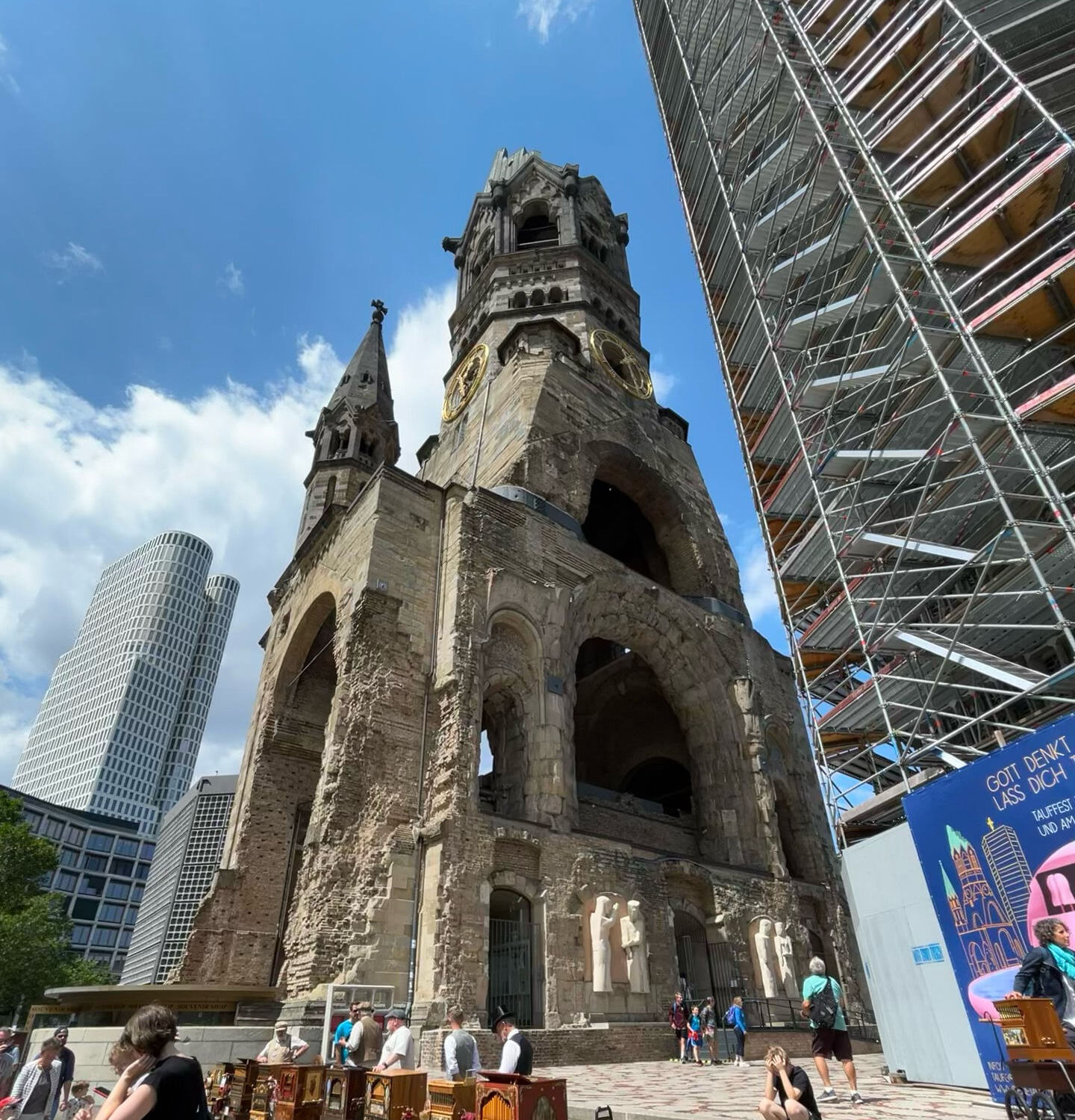
There is a church in the west of the city, broken by the war and never fully repaired. Berlin kept it that way on purpose, a wound left standing on its busiest street so no one forgets. That is the Berlin I believe in. A city that faces its painful past instead of looking away, and still chooses to care for what remains.